Zuletzt aktualisiert: March 2026
Layflat Photo Book Binding vs Other Binding Types: Which Should You Choose?
Quick Answer: What is Layflat Binding?
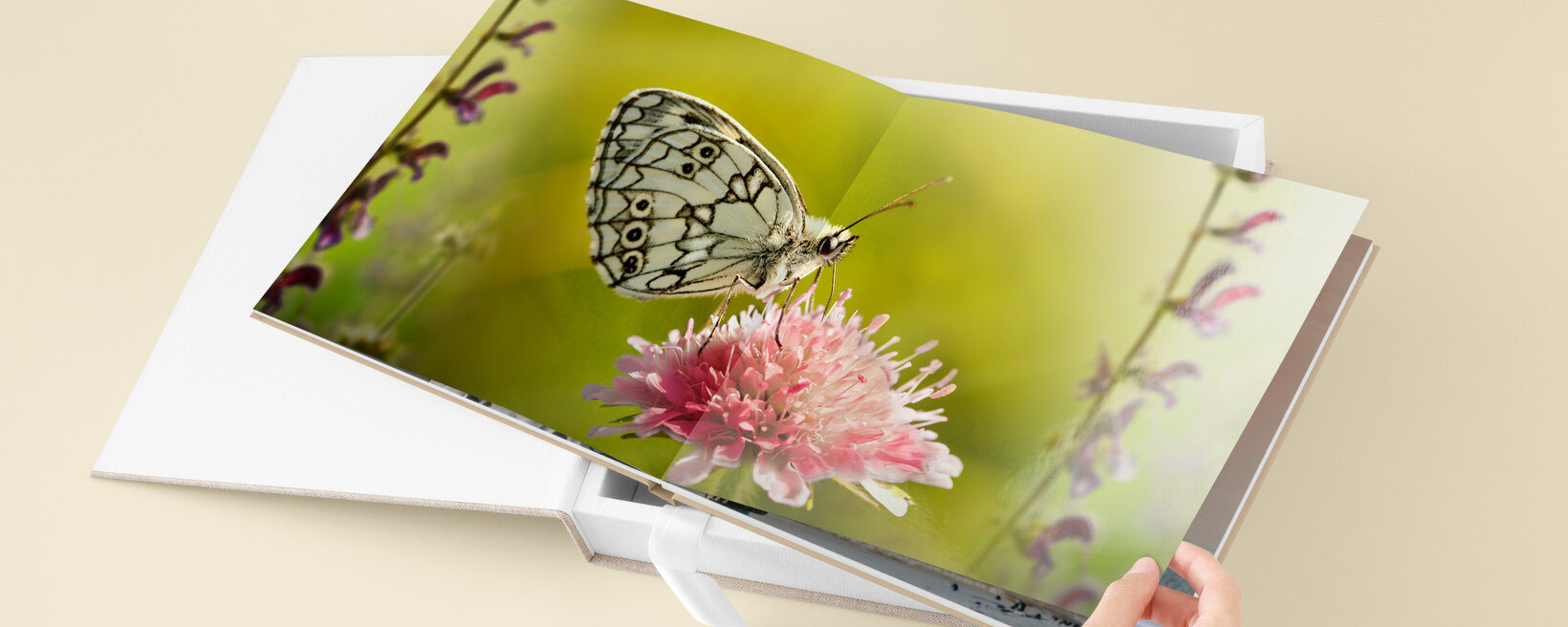
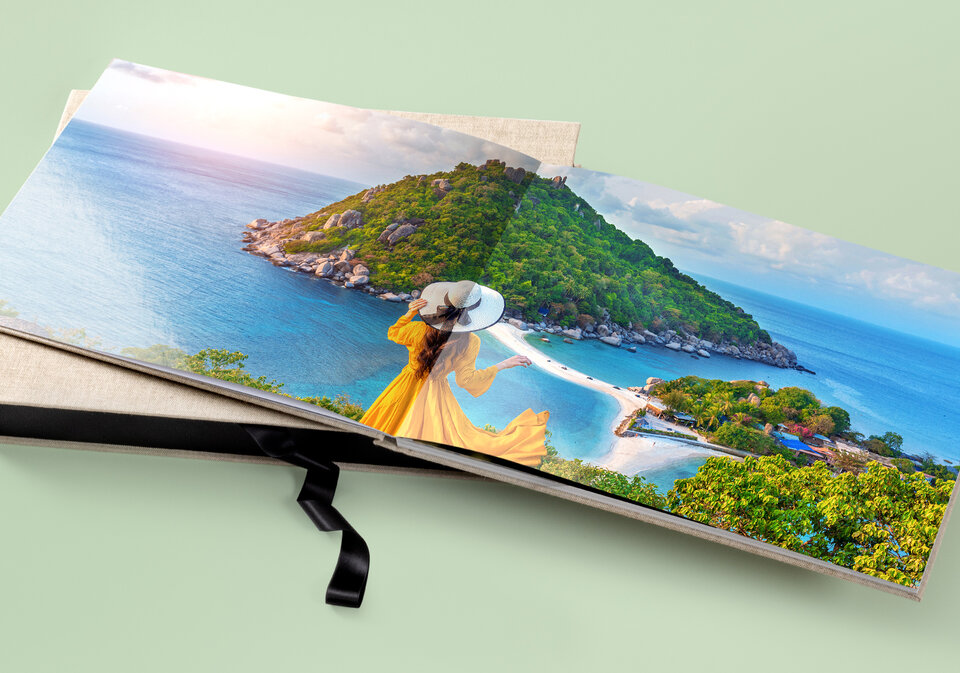
Layflat binding is a premium Photo Book binding method where pages lie completely flat when opened at 180°, creating seamless double-page spreads with no visible center gutter or image loss. This allows panoramic images, wedding photos, and landscape spreads to flow uninterrupted across both pages without distortion.
Worth knowing: Not all bindings marketed as "layflat" are genuine. Some budget services use layflat-style construction that still produces a visible gutter or slight curve at the center. True Layflat binding means zero image loss across the full spread.
Why Layflat Binding Matters for Professional Photo Books
Professional photographers, wedding albums, and portfolio presentations choose Layflat binding for three game-changing reasons:
- Seamless panoramic spreads: Landscape and architectural photos appear as one continuous image with zero interruption.
- No gutter shadow or image loss: Traditional bindings create a visible fold line that cuts through images crossing the centre.
- Premium hands-free display: The Photo Book stays open on any page without being held down, perfect for client presentations and coffee table viewing.
In an internal Saal Digital survey of professional photographers conducted in 2025, a strong majority reported preferring Layflat binding for client deliverables, because it enhances storytelling, prevents image cropping, and signals premium quality that clients recognize and value.
Layflat binding is the industry standard for professional wedding albums, portfolio books, and fine-art photography collections. Saal Digital includes it as standard across all Photo Books, making professional quality accessible without the typical premium cost.
Layflat Binding vs Perfect Binding: Detailed Comparison
Perfect binding is the most common traditional binding method, where individual pages are glued together at the spine. It is what most standard photo books use by default, and it is the most useful starting point for understanding what Layflat binding improves on.
The table below compares Layflat and Perfect binding across the features that most affect how your photos look and how the book holds up over time. Saal Digital includes Layflat panoramic binding as standard in all Photo Books at no extra cost, while most printing services charge extra for the same as a premium upgrade.
Pages lie flat
Center gutter loss
Max page count
Durability
Professional appeal
Cover options
Best for
Pages lie flat
Center gutter loss
Max page count
Durability
Professional appeal
Cover options
Best for
Yes, completely
0mm
160
Excellent
Yes, industry standard
Hardcover or Softcover
Panoramic spreads, weddings, portfolios
Pages lie flat
Center gutter loss
Max page count
Durability
Professional appeal
Cover options
Best for
Mostly, small gutter
3-5 mm
200+
Very good
Occasional
Hardcover or Softcover
Text-heavy books, family albums
Layflat vs Spiral Binding: What’s the Difference?
Spiral (or coil) binding uses a wire or plastic coil threaded through holes along the spine, allowing pages to rotate 360 °.
Spiral binding works well for: Functional projects like recipe books, workbooks, or proof prints where ease of use matters more than presentation quality. Saal Digital’s Photo Booklet is available for casual use and quick print runs where a spiral format suits the project.
For most Photo Books however, Layflat is the stronger choice. Spiral binding interrupts images with a visible coil and lacks the premium finish that wedding spreads, client deliverables, and professional portfolios deserve.
Pages lie flat
Center gutter loss
Max page count
Durability
Professional appeal
Cover options
Best for
Pages lie flat
Center gutter loss
Max page count
Durability
Professional appeal
Cover options
Best for
Yes, completely
0mm
160
Excellent
Yes, industry standard
Hardcover or Softcover
Panoramic spreads, weddings, portfolios
Pages lie flat
Center gutter loss
Max page count
Durability
Professional appeal
Cover options
Best for
Yes, with visible coil
Interrupted by coil
200+
Good
Rarely
Usually Softcover
Cookbooks, journals, proofs
Layflat vs. Saddle-Stitch Binding
Saddle-stitch binding uses staples through the fold to hold pages together, common in magazines and thin booklets.
Saddle-stitch works well for thin promotional booklets, event programs, or budget proofs under 40 pages. For Photo Books built to last, the table below shows why Layflat binding is the stronger choice across every key metric.
Pages lie flat
Center gutter loss
Max page count
Durability
Professional appeal
Cover options
Best for
Pages lie flat
Center gutter loss
Max page count
Durability
Professional appeal
Cover options
Best for
Yes, completely
0mm
160
Excellent
Yes, industry standard
Hardcover or Softcover
Panoramic spreads, weddings, portfolios
Pages lie flat
Center gutter loss
Max page count
Durability
Professional appeal
Cover options
Best for
Yes, naturally
2-3 mm
~60
Limited
Rarely
Softcover only
Thin booklets, event programs
Layflat vs. Hardcover Sewn Binding
Traditional sewn Hardcover binding stitches page signatures together before attaching to the cover, the classic library-book construction.
When image continuity and modern presentation matter, Layflat binding is the stronger choice regardless of page count. The comparison below shows where each method performs best.
Pages lie flat
Center gutter loss
Max page count
Durability
Professional appeal
Cover options
Best for
Pages lie flat
Center gutter loss
Max page count
Durability
Professional appeal
Cover options
Best for
Yes, completely
0mm
160
Excellent
Yes, industry standard
Hardcover or Softcover
Panoramic spreads, weddings, portfolios
Pages lie flat
Center gutter loss
Max page count
Durability
Professional appeal
Cover options
Best for
Mostly, slight curve
2-4 mm
200+
Excellent
Yes, traditional
Hardcover
High page-count traditional albums
When is Layflat Binding the Right Choice?
The short answer: almost always, especially when your photos deserve to be seen at their best.
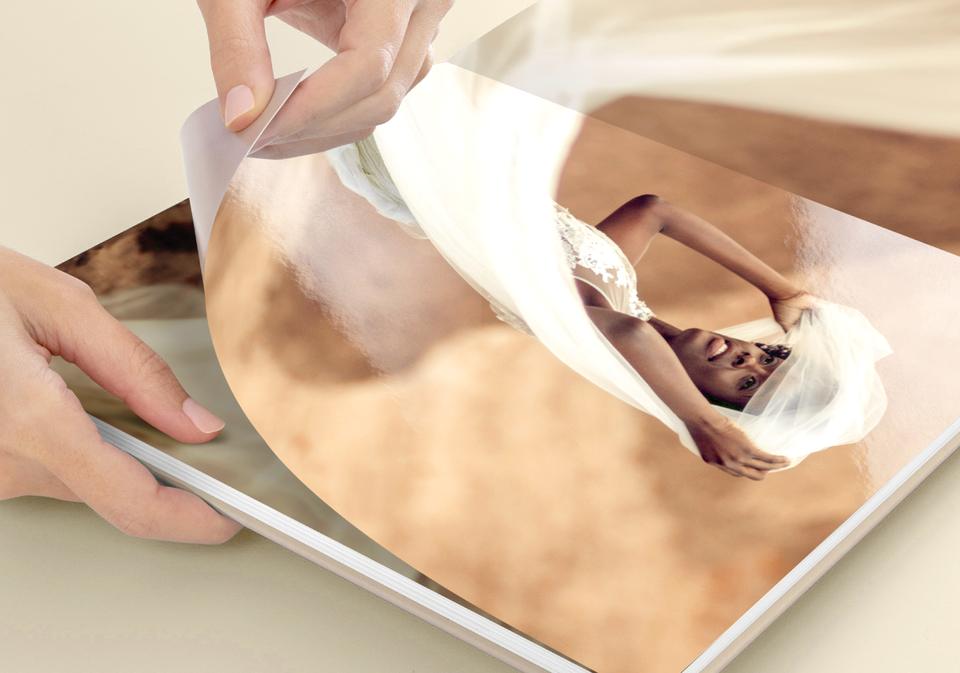
- Wedding albums where dress details or group photos span two pages
- Landscape and architectural photography portfolios
- Professional client presentations
- Any project with panoramic or double-page images
- Premium coffee-table books and heirloom albums meant to last generations
- Family albums, travel books, and gifts where quality matters
The good news: You don’t have to choose between quality and budget.
At most printing services, Layflat binding is a premium upgrade to your order. Saal Digital includes Layflat panoramic binding as standard across our Photo Books range at no extra cost. So whether you’re creating a wedding album, a travel book, or a family keepsake, you get seamless, professional-quality spreads without paying a premium for them.
Pages lie flat
Center gutter loss
Max page count
Durability
Professional appeal
Cover options
Best for
Available at Saal Digital
Pages lie flat
Center gutter loss
Max page count
Durability
Professional appeal
Cover options
Best for
Available at Saal Digital
Yes, completely
0mm
160
Excellent
Yes, industry standard
Hardcover or Softcover
Panoramic spreads, weddings, portfolios
Yes, standard
Pages lie flat
Center gutter loss
Max page count
Durability
Professional appeal
Cover options
Best for
Available at Saal Digital
Mostly, small gutter
3-5 mm
200+
Very good
Occasional
Hardcover or Softcover
Text-heavy books, family albums
No
Pages lie flat
Center gutter loss
Max page count
Durability
Professional appeal
Cover options
Best for
Available at Saal Digital
Yes, with visible coil
Interrupted by coil
200+
Good
Rarely
Usually Softcover
Cookbooks, journals, proofs
Photo Booklet only
Pages lie flat
Center gutter loss
Max page count
Durability
Professional appeal
Cover options
Best for
Available at Saal Digital
Yes, naturally
2-3 mm
~60
Limited
Rarely
Softcover only
Thin booklets, event programs
No
Pages lie flat
Center gutter loss
Max page count
Durability
Professional appeal
Cover options
Best for
Available at Saal Digital
Mostly, slight curve
2-4 mm
200+
Excellent
Yes, traditional
Hardcover
High page-count traditional albums
No
What About Hardcover vs. Softcover with Layflat?
Binding type and cover type are two separate choices. Layflat refers to how pages behave when the Photo Book is opened. Hardcover and Softcover refer to the external protection and presentation style.
- Hardcover + Layflat: Premium wedding albums, portfolio books, coffee-table presentations
- Softcover + Layflat: Travel Photo Books, event documentation, lighter-weight professional books
Saal Digital offers Layflat binding in both Hardcover and Softcover formats across the Photo Books range, so you get seamless spreads regardless of cover choice. The binding determines how pages behave; the cover determines external protection and presentation style.
How Layflat Binding is Made: The Technical Difference
Layflat Construction Process
Understanding the construction helps explain why Layflat Photo Books behave differently when opened.
- Pages are printed on premium photographic paper with a robust thickness and a smooth finish.
- Each printed sheet is mounted back-to-back, creating one uninterrupted double-page spread.
- A precision binding system allows the pages to open completely flat from edge to edge.
- The Photo Book is assembled without the heavy spine glue typical of standard bindings, ensuring flexibility and long-term durability.
- The cover is attached using a reinforced method that keeps the spreads flat while providing strength and stability.
Result: Every two-page spread lies perfectly flat with no visible curve or center gutter. The binding structure evenly supports the pages, preventing tension at the spine and allowing a seamless viewing experience across the full image area.
Traditional Binding Process
In traditional bindings, printed pages are stacked and glued or sewn along one edge to form the spine. The cover is then wrapped around and adhered to that spine. Because the pages are fixed at a single edge, they naturally curve toward the middle when opened, creating a visible gutter at the center and resistance to lying flat.
How Long Do Layflat Photo Books Last?
Layflat binding is more durable than traditional glued bindings because:
- The reinforced spine distributes stress evenly across the page surface
- Pages are fused or sewn, not just glued at one edge
- No cracking along the centre fold over time, because there is no fold
- Thicker paper stock that is significantly more substantial than standard print-on-demand books resists wear
Expected lifespan: 20-50+ years with proper care, stored away from direct sunlight and high humidity.
Saal Digital Photo Books are built for professional longevity, using archival-quality photographic paper and reinforced Layflat binding designed to withstand frequent use over decades.
Are Layflat Photo Books More Expensive?
Historically, yes. At most professional printing services, Layflat binding requires specialized equipment and adds expenses to the cost of a Photo Book. At Saal Digital, Layflat panoramic binding is included as standard in every Photo Book, at no extra charge. You get professional-quality seamless spreads without paying the premium that other services charge.
Cost comparison:
- Traditional services: You pay a premium for the upgrade to Layflat
- Saal Digital: Included at no additional cost
- Starting price: Visit our Photo Books page for current pricing across all formats and sizes.
Only our Portfolio Album uses a different binding system specifically optimized for professional client presentation portfolios with ultra-thick pages.
What Layflat Binding Lets You Do (That Traditional Binding Can’t)
With Saal Digital’s Layflat binding as standard, your design possibilities open up completely:
- Use full-bleed panoramic images across both pages with no gutter and no interruption
- Place faces, text, and key details anywhere on the spread, including right at the centre
- Build bold visual narratives that flow naturally from page to page
- Work with a canvas up to 60cm wide on our 30x30cm format, ideal for landscapes and group shots
- Design thematic pairs and let facing pages tell one unified story
With Saal Digital Layflat, the entire spread is yours to use. No restrictions on composition, no content kept away from the centre, no compromises.
Is Layflat Binding Worth It for Your Photo Book?
For most Photo Books, yes, especially when your photos tell a story across two pages. The viewing experience is genuinely better: pages lie flat, spreads are seamless, and the Photo Book stays open without being held down.
For simpler projects such as a quick gift or a single-photo-per-page layout, Layflat still works well, but its advantages are less critical.
At most printing services, Layflat binding adds extra to the price. Saal Digital includes Layflat panoramic binding as standard across the entire Photo Books range at no additional cost, so you get the best possible result without paying extra for it.
Frequently Asked Questions About Layflat Binding
Can I mix portrait and landscape photos in a Layflat Photo Book?
Yes. Layflat binding works with any photo orientation. The seamless spread is ideal for mixed layouts, and you can design each spread freely without worrying about the center gutter affecting your composition. Saal Digital’s Layflat Photo Books support any mix of orientations across all formats.
How many pages can a Saal Digital Layflat Photo Book have?
Saal Digital Layflat Photo Books support up to 160 pages, suitable for comprehensive wedding albums and large portfolios.
Do Layflat Photo Books last as long as traditional bindings?
Yes, often longer. Layflat binding distributes stress across the entire page rather than concentrating it at the spine. Saal Digital Photo Books are built for professional longevity using archival-quality photographic paper and reinforced Layflat binding designed to withstand frequent use over decades. With proper storage away from direct sunlight and humidity, expect 20-50+ years of use.
Does Layflat binding work with all paper types?
Yes. Layflat construction is compatible with matte, glossy, and silk photographic papers, and with uncoated natural paper. The binding method is independent of paper finish. You choose paper based on your aesthetic preference, and Layflat works with any option.
Will my images really have zero loss at the centre?
With true Layflat binding, yes. Zero image loss across the gutter. Some budget services advertise “Layflat-style” or “Layflat-inspired” binding that still has a small gutter or curve. Verify your service offers genuine panoramic Layflat binding. Saal Digital Photo Books use genuine panoramic Layflat binding as standard, delivering true edge-to-edge seamless spreads with zero image loss.
Which Saal Digital Photo Books include Layflat binding?
Almost all Saal Digital standard Photo Books feature Layflat panoramic binding at no additional cost. Our Portfolio Album uses a different binding system suited for professional presentation formats. Check individual product pages for binding specifications.

 Change your country